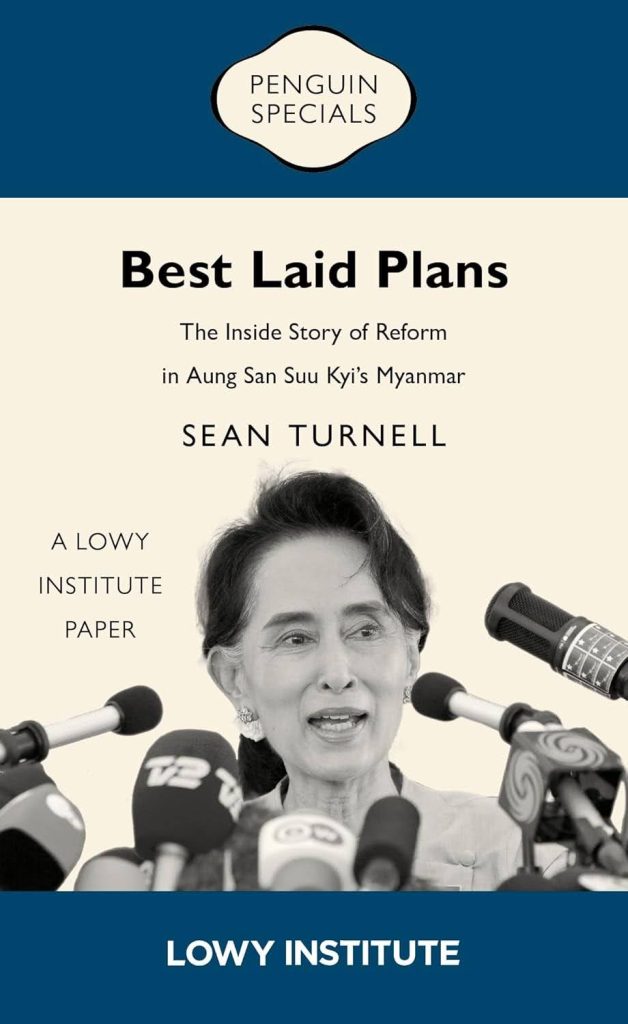
The first in-depth account of the economic reform program of Myanmar’s ill-fated Aung San Suu Kyi government, by one of her key advisors.
Best Laid Plans is a unique first-hand account of the radical economic reforms implemented in Myanmar under the ill-fated civilian government of Daw Aung San Suu Kyi. These reforms, designed both to turn around Myanmar’s dire economy and lay the economic foundations for democracy, were brought to a dramatic end following the military coup in Myanmar in February 2021. Written by one of Suu Kyi’s key economic advisors who was imprisoned alongside her in the wake of the coup, Best Laid Plans explores the nature of the reforms, the resistance they inspired, and the events that brought this all-too brief era of change to its catastrophic conclusion.
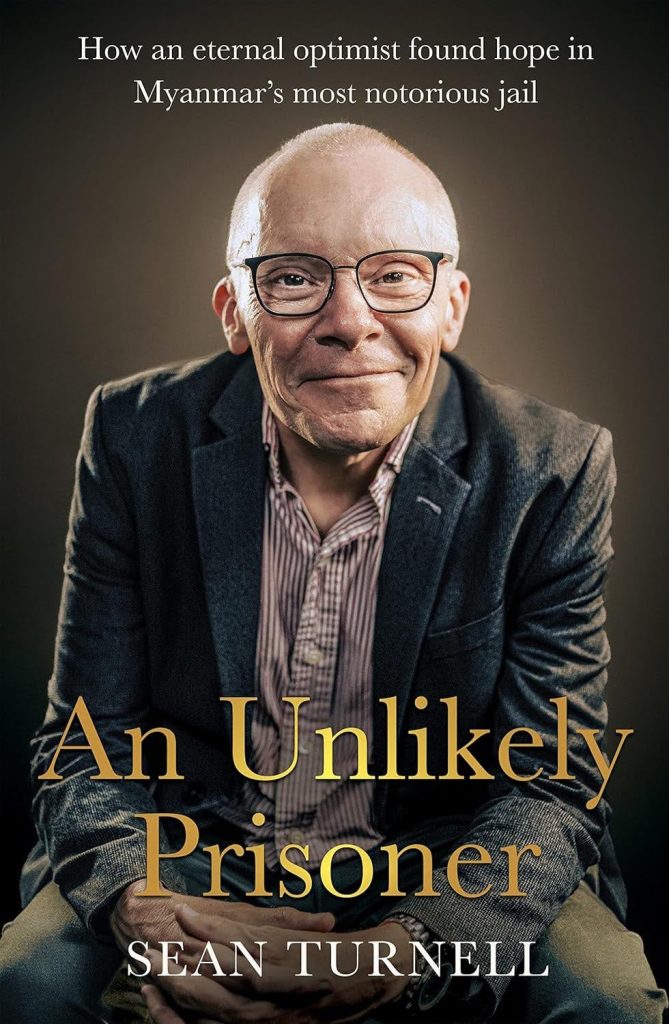
Sean Turnell recounts his harrowing 650-day detention in Myanmar following the February 2021 military coup. As a trusted advisor to the democratically elected leader Aung San Suu Kyi, Turnell was arrested on fabricated spying charges and incarcerated in the notorious Insein Prison.
The book details the absurdity of his situation and the psychological toll of his ordeal, while also highlighting moments of human resilience and camaraderie with fellow political prisoners. Turnell provides a unique insider’s perspective on the coup, using his economic expertise to analyze the junta’s motivations and the devastating impact of their rule on the country. Supported from afar by his tireless wife, Ha Vu, Turnell’s story is ultimately a powerful testament to survival and a stark look at the brutal reality of life under Myanmar’s military regime.
An Unlikely Prisoner
Kyar Pauk – The Odyssey
Following Myanmar’s military coup in February 2021, the country fell under authoritarian rule. Kyar Pauk, a celebrated Burmese artist and outspoken advocate for democracy, became a target of the regime and was forced to flee with his two daughters. His journey from Yangon, through the jungle, and eventually to Paris is told with emotion and humour, capturing both the fear of escape and the resilience it demands. The book offers a powerful personal account of exile, artistic resistance, and the human cost of standing up for freedom.
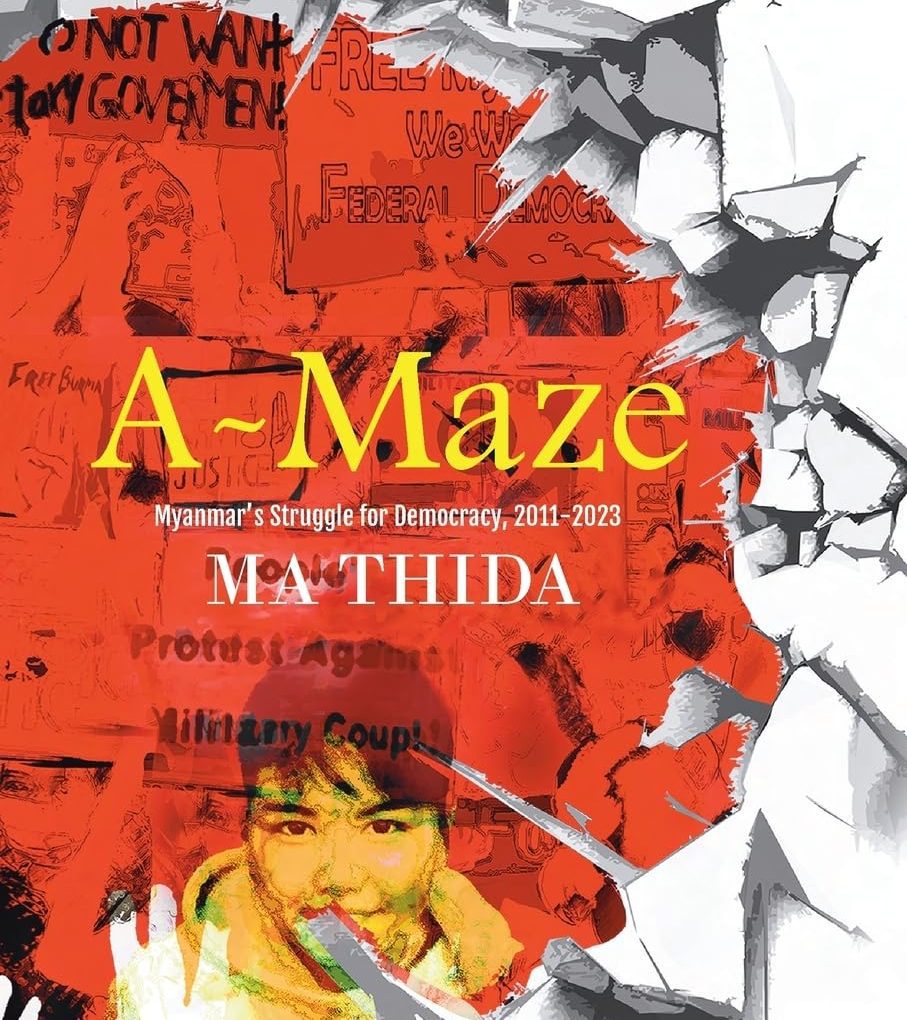
Despite hopes for democratic change between 2011 and 2020, Myanmar remained under strong military control. Using the image of a maze, the book explains how laws, political decisions, and long-standing social structures blocked real progress toward democracy. It shows how years of effort and sacrifice failed to lead to freedom. Written by Burmese writer and human rights activist Ma Thida, the book offers a clear and accessible look at Myanmar’s political deadlock and the continuing struggle for democracy.
Ma Thida – A-Maze
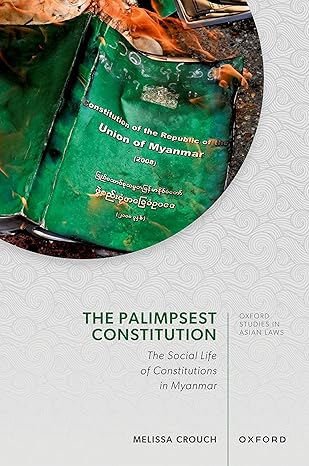
The Palimpsest Constitution: The Social Life of Constitutional Legacies in Myanmar
Since the mid-twentieth century, Myanmar has experienced repeated constitution-making under colonial, postcolonial, socialist, and military rule. This book explores how past constitutions continue to shape present struggles for democracy. Drawing on constitutional ethnography, Professor Melissa Crouch shows that Myanmar’s constitutions are layered with contested legacies rather than replaced outright. As the military defends the 2008 Constitution, pro-civilian actors resist authoritarian rule through alternative constitution-making. The book offers a sociological perspective on how constitutional legacies remain central to the fight for civilian rule in Myanmar.
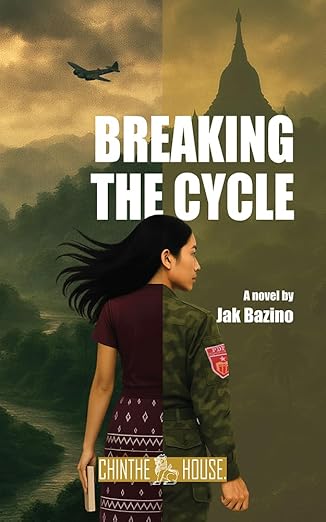
Breaking the Cycle, written by Jak Bazino, is a sweeping and powerful novel that connects Myanmar’s colonial past to its present-day resistance. Published by Chinthe House to mark five years since the 2021 military coup, the book spans eight decades and follows two intertwined lives. In Burma, 1942, young British archaeologist Anthony Preston discovers an ancient tablet pointing to lost Buddhist relics, a secret that becomes a deadly burden as he navigates betrayal, flight, and the collapse of Rangoon. Eighty-two years later, amid civil war, Yangon medical student turned Chin resistance medic Khin Yadanar recovers the same tablet and risks everything to complete Anthony’s journey. Unsparing and deeply human, Breaking the Cycle explores war, displacement, gendered violence, civil resistance, and the enduring hope for a federal democratic Myanmar.
Breaking the Cycle
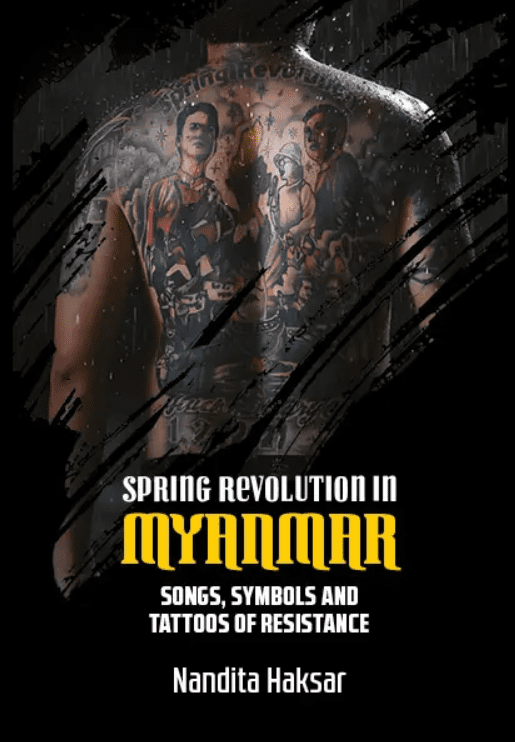
Spring Revolution in Myanmar Songs, Symbols and Tattoos of Resistance
Myanmar is synonymous with ethnic conflicts, brutal military repression and insurgencies. The ongoing civil war against the junta has been described as the longest and one of the most violent conflicts in the world today with a growing humanitarian crisis.
This book celebrates the spirit of defiance, resilience and enormous courage of the Burmese people in the face of the military regime’s extreme violence. It is a window into the world of Burmese resistance and the myriad cultural expressions that it has taken ever since the February 2021 coup. Crowdfunded by the Burmese diaspora, but largely ignored by the international community, this is a resistance where every cultural form – poems, songs and even tattoos – has been explored as a weapon.
The regime has tried to ban these songs of resistance, and persecuted and even executed artists, musicians and poets. But as poet Khet Thi (1986-2021) said, before he was killed by the junta, “You try to bury us underground, because you don’t know that we are the seeds.”
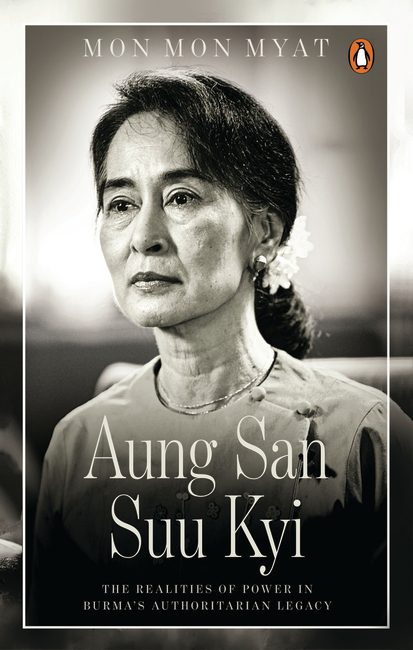
For more than three decades, Burma’s political prisoners, activists, and visionaries have embodied moral courage in defying authoritarian repression and unjust laws. At the forefront of this moral struggle stands Aung San Suu Kyi, whose unwavering commitment to nonviolence, democracy, and spiritual renewal has shaped the modern Burmese political landscape.
This book undertakes a philosophical exploration of Aung San Suu Kyi’s political thought, drawing inspiration from Johan Galtung’s study of Gandhi and guided by personal interviews and close observation of her political journey from 2012 to 2020. It examines whether she should be understood, as Michal Lubina suggests, as a ‘hybrid politician’—one who blends Western liberal ideals with Burmese Buddhist values—or whether a more fitting lens reveals her as a peacebuilder committed to a spiritual revolution.
This study challenges simplistic portrayals and explores whether Aung San Suu Kyi’s principled leadership reflects not a betrayal of liberal ideals, but rather the articulation of a distinctively Burmese path toward peace and justice. It presents a deeply contextual account of moral courage, just law, and an uncorrupted society as essential elements in Burma’s ongoing quest for federal democracy and decentralized governance.
Aung San Suu Kyi: The Realities of Power in Burma's Authoritarian Legacy
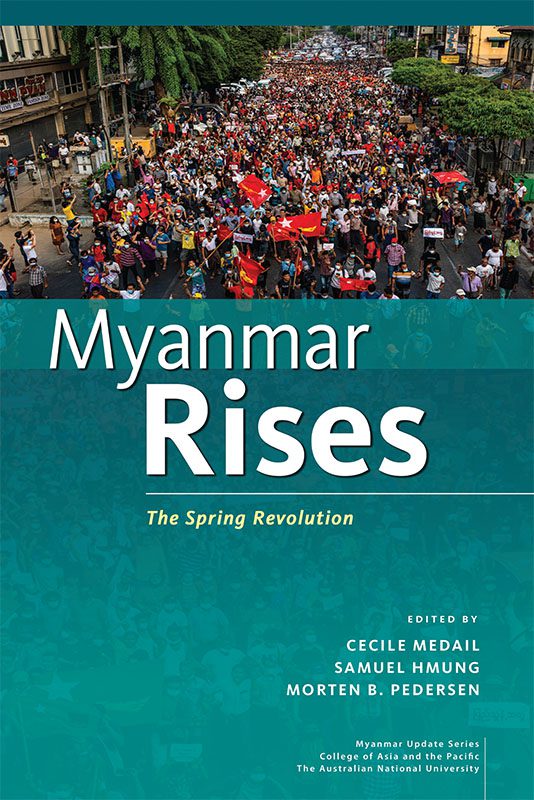
Myanmar Rises: The Spring Revolution
Myanmar’s post-colonial history is punctuated by uprisings, revolts and rebellions against unjust and illegitimate rulers. Yet the popular response to the 2021 military coup is, arguably, the first such anti-government movement that truly qualifies as a revolution. The scale of mobilisation across the country is unprecedented; so, too, is its broad social composition and the vision of alternative social and political relations and new forms of governance legitimacy expressed at both the national and local levels. Myanmar Rises brings together scholars, activists and practitioners from Myanmar and around the world to analyse and reflect on this movement, which is commonly known as the Spring Revolution. Twelve separate chapters examine the role of key revolutionary actors, including the armed resistance forces, the Civil Disobedience Movement, and emerging non-state political authorities in areas under resistance control; shed light on the deeper social transformations underway; and highlight the extreme economic, social, and humanitarian costs of the struggle. Together this collection presents an empirically rich and analytically deep account of a revolutionary movement that was established in protest against military rule but is fundamentally changing Myanmar politics, economy and society from the bottom up.